What Is Marine Automation and How Does It Work?
Marine automation is transforming the way modern vessels, yachts, and marine facilities operate by improving safety, efficiency, and control. From engine monitoring to navigation and onboard electrical systems, automation helps manage essential marine operations more accurately. Reels Smart Technologies provides a starting point for understanding how advanced automation solutions can support modern marine environments. Choosing a reliable Marine Automation company that Dubai businesses and vessel owners can trust is important for integrating these technologies effectively.
What Is Marine Automation?
Marine automation refers to using intelligent control systems, sensors, monitoring equipment and software to manage different functions on a vessel or within a marine facility. These systems minimize the need for manual operation and help crew members monitor equipment more efficiently.
Marine automation can be used on commercial ships, luxury yachts, offshore vessels, and other marine applications. Depending on the vessel’s requirements, it may control engines, generators, lighting, pumps, alarms, and other onboard equipment.
The priority is to improve the operational performance while maintaining safety and reliability. As a result marine automation helps operators monitor equipment more efficiently and respond quickly to potential issues. Furthermore, it reduces repetitive manual tasks and supports smoother vessel operations. By connecting different systems through a central control interface, marine automation lets operators monitor key functions and respond quickly to changes.
How Does Marine Automation Work?
Marine automation combines sensors, controllers, communication networks, and monitoring interfaces. Each component has a specific role in collecting information, processing it and helping operators manage vessel operations.
1. Data Collection Through Sensors
Sensors collect real-time information from different parts of a vessel. They can monitor engine temperature, fuel levels, oil pressure, water levels, electrical loads and other operating conditions.
As a result, the system immediately sends this information to the controller, allowing the crew to identify issues early. This lets them take corrective action before the problem becomes more serious.
2. Processing Information Through Controllers
Sensors provide information to programmable logic controllers (PLCs) and other control units which process it according to predefined settings. They also monitor operating conditions and trigger appropriate actions when needed. As a result these systems help maintain reliable performance and improve overall operational efficiency.
If a monitored value is outside its allowed range the controller can sound an alarm or take a programmed automatic action. This process reduces the need for continuous manual checks and supports consistent equipment operation.
3. Monitoring Through a Central Interface
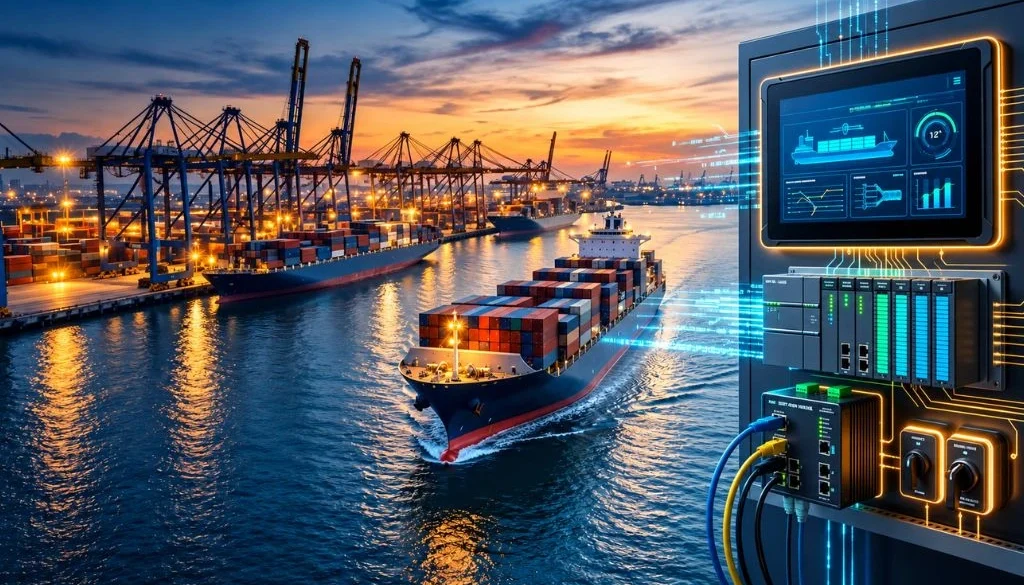
A human-machine interface (HMI) or supervisory control and data acquisition (SCADA) system can display important operating information on a central screen.
Crew members can use this interface to check equipment status, review alarms, monitor performance and adjust permitted settings. The available information depends on the installed system and the vessel’s configuration.
4. Automatic Control and Response
Marine automation systems can take action when predefined conditions are met. For example a control system may activate a pump when a tank reaches a particular level or start a standby generator when configured conditions are met. Furthermore, these automated responses reduce the need for manual intervention and help ensure smoother, more reliable vessel operations.
Marine automation systems can perform specific actions whenever predefined conditions occur. For example, a control system may activate a pump when a tank reaches a specific level. Similarly it can start a standby generator when the configured conditions are met. As a result, these automated responses reduce manual intervention and ensure sm other, more reliable vessel operations.
5. Alarms and Fault Detection
Where supported, monitoring systems can alert operators to abnormal readings with visual alerts, audible alarms or remote notifications.
Early warnings help the crew identify potential faults and arrange maintenance before equipment failure causes significant disruption. As a result operators can address issues promptly and reduce unexpected downtime. Moreover regular maintenance improves equipment reliability and supports smoother vessel operations.
Key Components of Marine Automation Systems
A marine automation system typically consists of several interconnected components.
- Sensors: Collect information on temperature, pressure fuel and water levels and equipment performance.
- Controllers: Process incoming data and manage programmed actions.
- Communication networks: Transfer information between connected equipment and control units.
- Monitoring displays: Present system status, operating data and alerts.
- Actuators: Perform physical actions, such as opening a valve or switching equipment, when instructed.
- Alarm systems: Notify the crew about abnormal conditions or potential faults.
- Data logging systems: Record operating information for analysis, reporting and maintenance planning.
The exact components depend on the vessel type, operating requirements and required automation level.
Types of Marine Automation
Marine automation covers several applications, each designed to manage specific vessel functions.
Engine and Machinery Automation
Engine automation helps monitor propulsion engines, generators, cooling systems, and other machinery. It can track operating temperatures, pressure levels, running hours and equipment status.
These capabilities help operators identify performance changes and plan maintenance more effectively. Depending on the installation, the system may also support automatic starting, topping and load management. As a result, operators can manage equipment more manually and efficiently. These functions also help maintain consistent performance and improve overall operational efficiency.
Electrical Power Management
Electrical systems on today’s ships power lights, communications, machinery, and onboard equipment. Marine automation can monitor generator performance, electrical loads and power distribution.
Some systems coordinate generator operation and load sharing based on preset settings. Good power management can help keep the electrical supply stable and reduce unnecessary energy consumption.
Bilge and Pump Automation
Bilge monitoring systems help to detect water in the designated compartments. Automated pumps may activate when water reaches a configured level, while alarms alert the crew to abnormal conditions.
Similar control systems can manage water transfer, tank filling and other pumping applications. Correct installation and regular testing are essential for reliable operation.
Lighting and Onboard Comfort Systems
On yachts and other vessels, automation may control interior lighting, climate systems, blinds, and selected entertainment features.
Integrated control interfaces can make these functions easier to manage. In a luxury marine environment, the system can also support customised lighting scenes and convenient control of selected onboard facilities.
Benefits of Marine Automation
Marine automation offers several advantages for vessel owners, operators nd marine businesses.
Enhanced Safety Monitoring
Continuous monitoring helps identify unusual operating conditions early. Alarms and fault notifications provide valuable information, allowing the crew to investigate potential problems promptly.
Automation supports safety procedures but it cannot replace emergency planning, professional supervision, or required manual checks.
Better Energy Management
Power monitoring and automated load management can help vessels use electrical equipment more efficiently. Depending on the installation, operators may identify unnecessary energy consumption and improve the use of available power.
Greater Control and Convenience
Centralised monitoring makes it easier to check system status and manage connected equipment. On suitable vessels, authorised operators may also access selected monitoring functions remotely through secure communication systems.
Marine Automation Services Dubai: What Can You Expect?
When evaluating Marine Automation services Dubai, vessel owners should consider the specific systems they need, the vessel’s operational requirements, and the service provider’s technical expertise.
Marine automation services may include:
- System design and integration: Planning how different marine systems will communicate and operate together.
- Installation and configuration: Installing s nsors, controllers, monitoring displays, and other compatible components.
- Control panel development: Providing interfaces that help operators monitor and manage connected equipment.
- Testing and commissioning: Checking system functions, alarm responses, communication links and operational performance.
- Troubleshooting and repair: Locating faults and restoring supported systems to expected operation.
- Maintenance and upgrades: Inspecting existing equipment and updating components when required.
Service availability varies by provider. Before selecting a company, confirm its experience with our vessel type the brands it supports, and its ability to provide ongoing technical assistance.
How to Choose the Right Marine Automation Company
Choosing the right provider is key to getting a reliable automation system. A suitable company should understand the vessel’s technical requirements and recommend solutions that match its operating environment.
Assess Technical Experience
Look for experience with the relevant marine equipment, control platforms and integration requirements. Previous work involving similar vessels or systems can help demonstrate whether a provider is suitable for the project.
Check After-Sales Support
Maintenance, troubleshooting and replacement parts can matter throughout a system’s service life. Ask about service availability, response times, warranties and support for future upgrades.
Compare the Scope of Services
When comparing Marine Automation company near you search results, look beyond price alone. Review the proposed scope, technical specifications, installation requirements, maintenance arrangements and relevant project experience.
A clear proposal makes it easier to understand what is included and whether the recommended solution meets your operational needs.
Marine Automation Services Near you: When Do You Need Professional Help?
Searching for Marine Automation services near you may be useful when a vessel experiences recurring alarms, inconsistent sensor readings, communication failures, or problems with automated equipment.
Professional assistance may also be needed when installing a new monitoring system, upgrading an older control panel, integrating additional equipment, or improving the visibility of engine and electrical performance.
Common warning signs include unexplained shutdowns inaccurate readings, repeated equipment alerts and systems that do not respond as expected. Qualified marine technicians should assess these issues especially when they involve propulsion, electrical power, bilge systems, or other safety-critical functions.
Routine inspection is equally important. By testing alarms checking sensor accuracy, reviewing software configurations and inspecting electrical connections you can detect potential problems before they interfere with normal operations.
The Future of Marine Automation
Marine automation continues to evolve as vessels adopt more connected, data-driven technologies. Several trends are shaping the industry’s future.
Predictive maintenance uses operating data and analytical tools to identify signs of potential equipment failure. This may help maintenance teams plan interventions before a fault causes an unexpected shutdown.
Remote monitoring allows authorised personnel to review selected system information from an off-site location when secure connectivity is available.
Energy optimisation helps operators analyse power consumption and improve equipment scheduling. These capabilities are increasingly relevant as the marine industry focuses on operational efficiency.
Integrated control platforms bring more vessel functions into a coordinated interface. Better integration can simplify monitoring, although system design must account for cybersecurity, compatibility, redundancy and safe operation.
These developments can improve decision-making, but their benefits depend on correct implementation, reliable data regular maintenance, and appropriate human oversight.
Conclusion
Marine automation helps modern vessels operate more efficiently by connecting sensors, controllers, monitoring interfaces and automated equipment. From engine monitoring and power management to navigation support and onboard comfort, these technologies provide better visibility into essential vessel functions.
Understanding how marine automation works makes it easier to identify the right solutions for a particular vessel. Whether you need a new installation, system integration, troubleshooting, or maintenance, evaluate the provider’s technical experience, equipment compatibility, safety practices, and after-sales support before deciding.
A well-designed marine automation system can improve operational control, support early fault detection, and help vessel operators manage equipment more effectively ov r the long term.